



Gardeners and Architects: Planning Your Novel (or Novel Series)

Why most writers are actually plantsers…


Are you a plotter or a pantser?

Most writers pick a side. But I think the real answer is messier and more nuanced. In this video, I break down the gardening vs. architecting spectrum from a fantasy and sci-fi writer’s perspective.

Whether you’re writing flash fiction or a 10-book epic series, your approach to outlining needs to match your story’s scope, your voice, and how your creative brain actually works.

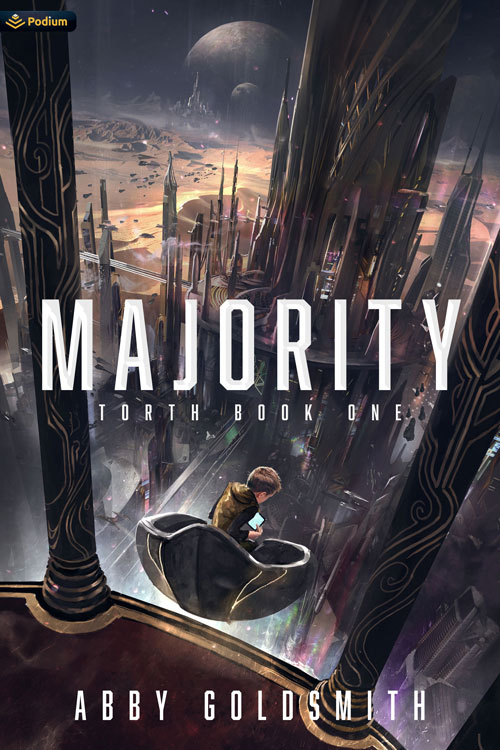
I share the hybrid system I used across two series of epic fiction, including the four-act structure I mapped out for each volume of the Torth series.

Here’s why a meticulous outline can fall apart mid-draft when a new character shows up, and why my series skeleton is a work in progress even 390,000 words in.

Timestamps:

  • 0:00 Gardening vs. Architecting (the real plotter/pantser debate)
  • 0:26 Why story scope and format change everything
  • 0:58 What discovery writing actually looks like
  • 1:57 The case for writing to a formula (and why I don’t)
  • 2:51 My four-act structure and the Torth series
  • 3:47 The house of cards problem, 390,000 words in
  • 5:28 My hybrid approach: the Hanging Gardens of Babylon method


Crafting an epic novel (or series of them) is like building a house of cards. The foundational layers are crucial and difficult to change. The upper layers are malleable and in flux.

The Slop Epidemic Destroying Amazon’s Book Market

The rise of AI-generated books published on Amazon and Amazon’s Kindle is a growing concern, especially with the removal of the “look inside” preview feature. This trend stifles innovation, originality, and creativity.

We have the literary equivalent of DR Horton homes everywhere.

Does the reading public really crave generic dreck? Or are people simply going to quit reading rather than struggle to find the buried gems?

Apologies for the poor audio quality on this video.

  • 00:00:00 – AI Books Flooding Amazon
  • 00:00:32 – Should Amazon Charge Per Upload?
  • 00:00:49 – I’m Considering a Return to Web Serials
  • 00:01:05 – How to Spot AI-Written Writing
  • 00:01:53 – Will AI Eventually Degrade Itself?
  • 00:02:25 – Established vs. Newer Authors in the AI Era
  • 00:03:01 – Readers Are Retreating to Old Favorites (and that’s a shame)

Passion For Your Project

My new video is about passion for your novel/series over the long haul, when the typical “just write!” advice doesn’t cut it.

Here are my secrets to staying motivated on long projects (2–20 years)!

⏱ Chapters:
00:00 What does an “excited author” look like?
00:16 Why passion matters for long-term creative projects
00:38 The two extremes: “navel gazing” vs. mercenary writing
01:28 The balance between loving your work and thinking about audience
01:50 The joy of writing novels (worldbuilding + characters)
02:29 Storytelling as taking your reader on a ride
03:06 Mastery: controlling emotion, pacing, and reader experience
04:21 Where passion really comes from (themes, exploration, obsession)

Completing a big project is not just a matter of slavish discipline. At the core of it all, you need passion for the project.

Agents Want Comp Titles. Do Readers Want Something Else?

Comp titles are one of the most hated parts of querying literary agents. I think they are worthy of a rant.🔥

✅ Chapters:
0:00 – Comp Titles Explained
0:20
– Why Agents Require Comp Titles
0:46
– The “Recent Debut” Rule (2–3 Years Only)
1:14
– Why Indie & Unique Books Get Ignored
1:32
– How Comp Titles Create a Publishing Echo Chamber
2:04
– For Readers Seeking Fresh, Original Books

7 Things That Kill Your Royal Road Story Before It Starts

Royal Road is the biggest web serial platform in fantasy and sci-fi.

If you want a real shot at traction there, you need to write with the audience in mind. Because Royal Road is not Amazon, Webnovel, or Wattpad. It has its own culture and its own reader expectations. Some stories are an easy sell to the RR audience, and some are a hard sell no matter how talented you are.

Here are 7 likely reasons why Royal Road readers quit reading your story.

📌 In this video, you’ll learn:
✅ What Royal Road readers consider “amateur writing”
✅ What genres are easiest to sell on Royal Road
✅ Why power progression dominates the platform
✅ Why infodumps and slow openings kill retention
✅ Why multiPOV is a bigger risk than most writers realize
✅ The hidden reason “too much suffering” turns readers off
✅ What kind of romance and comedy works (and what doesn’t)

I’ve read many of the top trending Royal Road series (and I rate them on Goodreads), and I’ve personally hit #4 on Rising Stars. This is my analysis of what the platform rewards right now, and which writing styles (including multi-POV, present tense, and overly literary prose) might quietly sabotage your launch.

  • 00:00 – Easy Sell vs Hard Sell on Royal Road
  • 00:56 – #1: Amateur Signals That Kill Reader Trust
  • 02:34 – #2: Genres That Don’t Belong on Royal Road
  • 03:28 – What Genres Perform Best on Royal Road
  • 04:13 – #3: Literary Prose vs Reader Expectations
  • 05:15 – #4: Romance (What Works and What Doesn’t)
  • 05:40 – #5: Comedy Done Right vs “Trying Too Hard”
  • 06:21 – #6: Why Readers Hate MC Suffering
  • 07:16 – #7: Multi-POV and Present Tense = Hard Mode
  • 08:05 – Final Advice: Study Top Stories Without Selling Out

🔥 Happy writing! And good luck reaching for Rising Stars.

Daydreaming Is A Writer’s Superpower


Do you daydream so much it feels like a problem? What if it’s actually your greatest writing superpower?

0:00 Introduction: Vivid Imagination as a Creative Superpower
0:16 What Is Maladaptive Daydreaming?
0:41 How Daydreaming Fuels Epic Storytelling & World Building
1:24 The Daily Walk Method: Visualizing Scenes Before You Write
1:54 Crafting Emotional Waves in Your Story
2:18 Building Characters You’re Obsessed With
3:07 Using Music Playlists as Creative Cues
3:33 Keyword Triggers & Getting Into the Zone
4:12 You Don’t Have to Walk, Other Routine Activities That Work
4:27 When Daydreaming Bleeds Into Lucid Dreams
5:18 Keeping a Healthy Boundary Between Fiction and Reality
5:47 Let Excitement & Characters Lead
6:08 Pantser vs. Plotter: Why Daydreaming Is Both

Are you a creative with a vivid imagination, or maybe even a daydreamer who can’t seem to turn it off? In this video, author and artist Abby shares how she transformed her lifelong habit of intense daydreaming into a powerful writing tool. From daily walk-and-daydream sessions to mood-cueing playlists and lucid dreaming, she breaks down her exact process for visualizing scenes, building emotionally resonant story arcs, and crafting characters you can’t stop thinking about. Whether you’re a pantser, a plotter, or something in between, this video will help you unlock the storytelling superpower hiding inside your own imagination.

Financial LITERACY for CREATIVES

If you’ve ever thought about quitting your job to pursue your creative work full time, this video is going to save you a lot of pain. I’ve done it. I know people who’ve done it. And there are things I wish someone had told me first.

Whether you’re a novelist, artist, game developer, or any kind of maker, this is the financial literacy crash course built for how creatives actually live and work.

0:00 Introduction: financial mindset for creatives
0:47 Quitting your day job: what nobody tells you
1:43 The real competition you’re up against today
2:42 How algorithms favor rapid content generation and volume over quality
4:04 The psychological trap: passion becoming pressure
5:19 What successful creators actually do differently
6:09 Finding the right day job as a serious creative
7:11 Sustainable creative habits that actually last
7:47 Passive income reality check for artists
9:01 Basic investing: ETFs, Vanguard, dividends
10:37 Tracking your creative income like a business

The honest truth: your creative work and your financial health don’t have to be enemies. This video explores how to make money as an artist while striving for financial freedom, acknowledging that everyone’s personal journey is unique.

Are We Heading Into A POST-LITERATE SOCIETY?

“Students who read for fun on their own time fell from 27% to 14% in 2012 to 2023. Those who never or hardly ever read for fun on their own jumped from 22% to 31%.”

  • https://www.nytimes.com/2025/12/12/us/high-school-english-teachers-assigning-books.html
  • https://jmarriott.substack.com/p/the-dawn-of-the-post-literate-society-aa1
  • https://jabberwocking.com/is-the-plunge-in-teen-reading-because-of-smartphones/
  • https://news.harvard.edu/gazette/story/2025/09/whats-driving-decline-in-u-s-literacy-rates/


Here’s my AuthorTube take on the decline of literacy.

  • 00:00 The American public is reading less, and here’s some evidence.
  • 01:55 Why the loss of reading matters and should not be dismissed.
  • 02:46 Why finding good books is difficult.
  • 06:15 The rhetoric against controversial and original concepts.
  • 07:42 Other story mediums and formats.
  • 08:30 What turns children and adults off to reading.
  • 09:53 In favor of books: a solo visionary is often better than a story written by committee.
  • 11:00 Books are the medium of history and intergenerational communication.
  • 11:46 Writing gives a voice to the voiceless.
  • 12:18 Remakes, rehashes, and derivative slop.
  • 13:10 If you don’t like to read, here are some suggestions.


Related video on the Male Reading Crisis

FIRESTARTER Book Review: Childhood Wonder vs Adult Analysis

Rereading FIRESTARTER. Does Stephen King’s Classic Hold Up?

00:00 Some casual sexism, a bit dated due to it being published in 1980
01:10 When the ordinary is horrific
01:34 When supernatural superpowers was weird and inconceivable
02:32 SPOILERS from here on out!
02:43 Setting audience expectations astronomically high, and ratcheting up the tension
03:06 Stephen King’s self-insert, and who the story is really about
04:06 Overcoming addiction as a mental trick
05:33 Acting like a stoned idiot as an act of heroism
06:08 Government agency versus a normal father and daughter
07:00 Overreliance on a computer instead of using common sense
07:41 It’s one of my favorites by Stephen King

Here’s a literary analysis of the novel “Firestarter,” reflecting on its themes, its era, its audience, and its impact.

Why people hate the final season of STRANGER THINGS

Here’s my take on Stranger Things, spoiler-free… from an author who vaguely remembers the 1980s!

This video examines the divided reception of the show, acknowledging criticism for characters Eleven and Will Byers while praising interpersonal dynamics and side characters with strong personalities.

« Older posts
© 2026 Abby Goldsmith DBA Fiery Press