



Is Creative Guilt Ruining Your Holidays?

Are you locked in a creative mode while your family (or day job, or dog) begs for your time?

In this post-scarcity era of creative content, why do we do this to ourselves? There are enough books/films/games/art in the world. And we all know that exponential and constant growth is unsustainable.

Sometimes it’s best to step back from all the pressures, the incentives, and the societal guilt that urges you to produce and produce and generate even more content.

Just breathe.

Competing For Visibility When You Only Write ONE CHAPTER PER WEEK


Successful web series authors often write more than three chapters per week. Here’s how you compete when you only write one per week.

Abby is preparing to launch her new epic fantasy series in 2026.

Is NaNoWriMo Dead or Undead?


– The implosion of the official NaNoWriMo group.

– Sit Down, Shut Up, and Write, a Meetup Group.

– Royal Road’s Writathon.

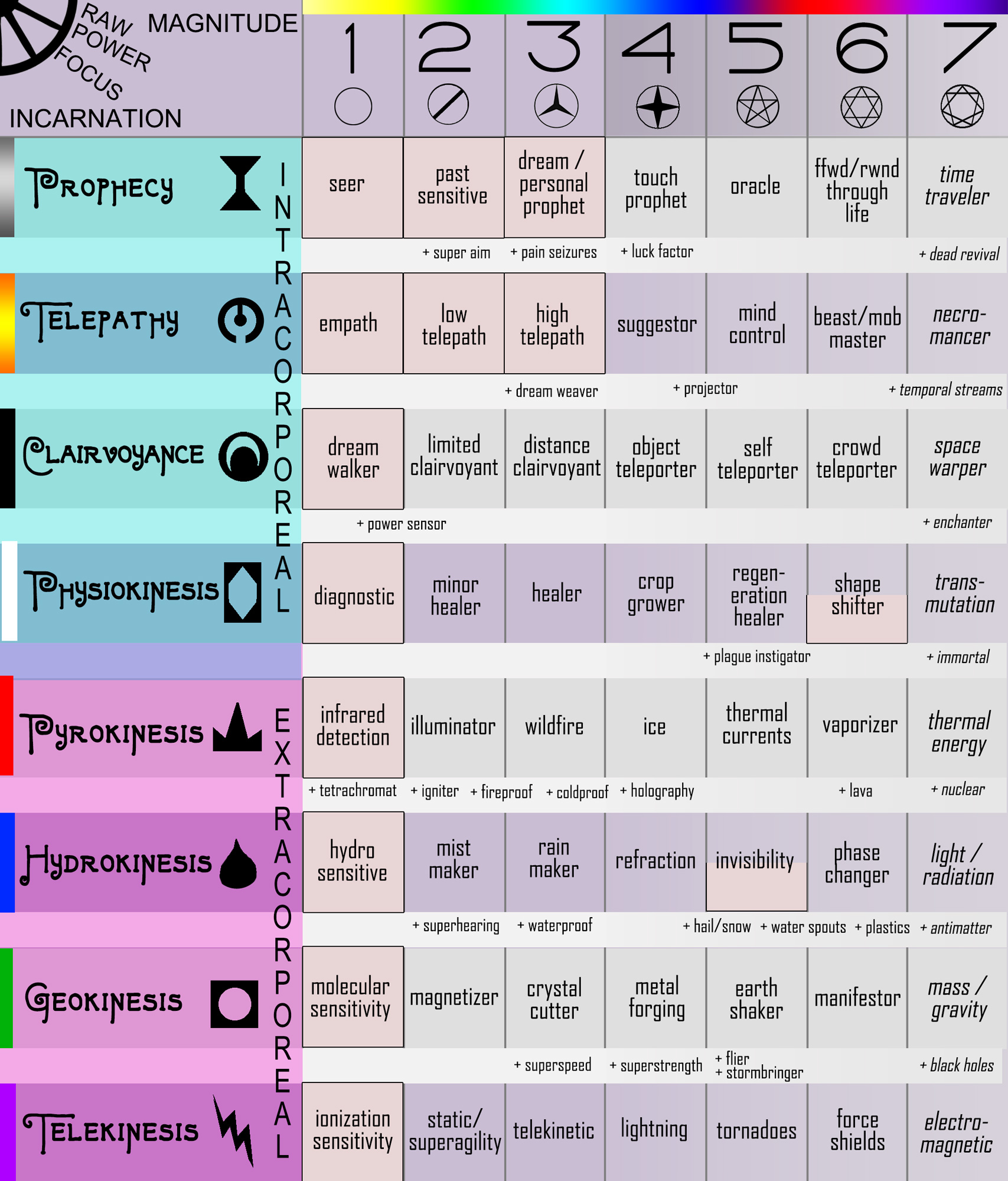
Here’s my POWER CHART for the Torth series

The Torth universe has a hard magic system, similar to superpowers. Here I walk through the power chart I created as the basis for the system in my 6 book sci-fi fantasy series.

What Makes FIRST CONTACT Stories So Compelling?

Here’s why extreme culture clashes make for such compelling storytelling, with epic heroes, crazy villains, and powerful action-based plots. The best sci-fi and fantasy books include conquest or extreme first contact situations. So does historical nonfiction, particularly the Age of Exploration and the Spanish Conquistadors.

Inside the FEUD Between Progression Fantasy Web Serial Authors

Abby pays a lot of attention to the sci-fi & fantasy publishing industry, over 20+ years of taking writing seriously. Here’s her take on the latest controversy among indie authors who write progression fantasy, litRPG, isekai, superhero, wuxia, and web serials.

Does “Write To Market” Mean Write To Trend?

Abby dissects the motives behind the popular writing mantra: Write To Market, and speaks in defense of creativity and originality.

  • 00:00 Does “write to market” mean writing to trend?
  • 00:42 Why popular tropes and trends matter for visibility and discoverability as an author.
  • 01:33 Why Abby values originality and groundbreaking fiction.
  • 03:06 Why it’s hard to sell cross-genre, off-meta, conceptually original fiction.
  • 03:49 Why popularity algorithms have a chilling effect on creativity.
  • 05:12 Why you should risk being unapologetically creative even though the tide is against you.

Post-mortem on Torth

It’s embarrassing to listen to a sex scene I wrote, narrated in George Newbern’s irreverent tone. Not sure I will ever write a sex scene again.

That scene is in the audiobook edition of the final Torth book, which just launched today.

These books were a massive undertaking, with the whole series totaling 1,000,000 words after I discarded 2,000,000 words or so. The books were published at a far faster pace than it took to write them.

I began working on the Torth series when I was in my early twenties, expressing my worldview and diving deep into an exploration of freedom versus slavery. It was partly inspired by The Wheel of Time in terms of interpersonal power dynamics, and Star Wars in terms of universe scope and aliens, and lots of other things. I went to film school. I’m a reader.

My goal was mainstream trad pub, otherwise known as the Big Five (MacMillan etc). After two rewrites and years of bending over backwards in a futile effort to please literary agents, I finally realized this isn’t the 1990s, and they just aren’t looking for heroic doorstoppers anytime within the next decade or two.

It was hard to let go of the Big Five dream. If you want the sordid details of how and why it took me so many years to switch gears, feel free to ask. But I did, eventually, seek an audience online. That was what motivated me to pick up where I had stalled (right after Book 2) and finish the whole epic. 

Wattpad gave me my first readership. That was the first place a reader asked me, “Where’s your Patreon so I can read ahead?” Hugely motivating. I wrote new chapters and posted one or two per week from 2017 through 2023.

As I was posting the final chapters on Wattpad, I relaunched the whole series on Royal Road. I figured my 500 prewritten chapters would enable me to gain notice quickly with a rapid launch pace. Three chapters per day turned out to be insane, since I was editing as I went. And then I went through cancer and had a hospital stay and chemotherapy. I lost a few readers when I reduced my pace to three chapters per week. It was necessary. Even so, my series went to #1 on the Sci-Fi Rising Stars chart and topped out at #4 on overall Rising Stars. That was partly due to the supportive community of authors and adventurous readers who hang out around the web serial community, particularly in litRPG and progression fantasy. 

When my series hit the front page of Royal Road, I got an offer from a publisher and interest from another. I signed a six book contract. That publisher, Podium, put a lot of time and effort into producing my series as high quality audiobooks, ebooks, and print editions. I’m grateful.

There’s some advice floating around implying that a book series with great read-through equals a cash cow. That hasn’t totally been the case for mine. Readers who pick up Book 2 of mine tend to read through all the way to Book 6. The ones who get to the end are some of the best fans anyone can ask for. They get what I was going for, and they were on board every step of the way. I love the reactions. I’ve had some very touching letters from readers. That alone makes everything I wrote worthwhile.

Financially, though? Sales figures-wise? I think I have an intrinsically hard sell on my hands here. It’s not Romantasy, Cozy, litRPG, Isekai, Cyberpunk, or Cultivation (the hot sci-fi and fantasy subgenres that sell well on Amazon). It’s dark. It’s complicated. It’s big. It’s weird. It’s unique. This isn’t something that pops up in a quick search or in also bought lists.

I’m vending at in-person events in and around Texas, such as Comicpalooza. It’s nice to escape the trials of online book marketing and talk with readers face to face. I wish my series had more visibility, but there are thousands of new books published every day on Amazon. It blows my mind that so many people’s hopes and dreams go unread, unnoticed, and buried. We live in strange times. 

My series is dystopian sci-fi with elements of progression fantasy and a hard magic system. It starts with MAJORITY and is available in Kindle Unlimited and Audible+. 

To the unsolicited book promoters…

What inspires you? Wow, you must spam a lot of people. You’re so uncreative. Oops, did I fail to match the empty platitudes you opened with?

Anyway, as so many of you book promo “specialists” say in your scripted bot language: Are you open to a few suggestions?

I might be able to boost your spiel to a whole new level.

First of all, if you’re commenting on a post where the author announced their book alongside an image, and you say “Wow, is this your first book?” well, that doesn’t land the right way when the text of the posted cover image says Torth Book 5. You’ve just signaled that you never looked at their book cover. Your disregard for basic due diligence proves that you are either using a script or you lack basic comprehension skills. That’s not a promo specialist that any professional would want to hire.

Also, displaying cluelessness about an author’s genre is not the way to gain their trust. Book trailers, social media graphics, and book promo need to be tailored to specific genres and audiences. Professional authors spend years studying these things. We can’t avoid it. Your generic offers are a huge red flag that you either don’t know the genre of the author you’re spamming, or you don’t care. Either way, you’re a time-wasting nuisance and I will not respond to your low effort message or comment.

You might begin to actually profit from professional authors (as opposed to scam victims) IF you took the time to intimately learn a genre and subgenre in the book world. Engage with the art. Try being a human being. Stop relying on scripts and stop trying to lazily make a quick buck. Otherwise, any author with a brain will clock you. 

Typos & idiocy are not the way. Greeting an author by misspelling their name is not the way. Generic, scripted offers full of impossible promises are not the way. When you approach me like a bumbling amateur looking for a victim, I am not going to respond. 

Against the incentives that drive rapid release

There’s a myth going around the online spaces where creatives hang out. That myth is that consumers are all incredibly voracious beasts who just want moar and moar and moar, and that no matter how many thousands of books/films/games are published each day, the consumers can never be satiated. Every reader must be reading 100,000,000,000 words per day.  It is therefore every professional creator’s duty to deliver as much content as possible. Anything less and you (as a creator) will be ignored, left behind, and relegated to obscurity forever.

I first began to hear this myth circa 2010. When I pressed one of its propagators for an explanation–“But why? How do you know this is true?”–she responded with insults. If I dared to question her sage advice to rapid release, then I had zero chance to become a bestseller or anyone of note. She didn’t know why. She just knew it was so.

She is mostly right, it turns out.

Most income earning creatives (authors, etc.) stay in the black by hewing to the principle of rapid release. As of 2024, the common professional advice to indie authors who want to earn a full-time living is to produce more than 400,000 words per year. That’s equivalent to four or five novels.  Any less than that, and you won’t be able to capitalize frequently enough on Amazon’s new release category. Your brand name will get buried in the nonstop deluge from fellow authors who are also releasing new books. You will not be noticed. (And sure, you can attempt to land a trad pub Big Four sweetheart contract, but everyone knows that’s pie-in-the-sky. Gaining Big Four marketing clout is like winning the Olympics or the lottery.)

The principle of rapid release doesn’t just apply to major retailers like Amazon. It pervades all spaces for creative works, including free fiction hubs like Wattpad and Royal Road. It is not solely a problem created by megacorporations. Indie game developers and indie film makers and indie comics creators and indie musicians are dealing with the same thing, even in their underground free incubators.

And now we have LLMs, aka “generative A.I.” empowering creatives enabling uncreatives to produce even moar content faster. Rapid release is skyrocketing. Rapid release rules all. Rapid release is everywhere, and how dare you question it. Conform or die.

I’m not questioning the fact that rapid release works. Everyone knows that it is, by far, the most effective way for indie creators to gain viable income streams. It clearly is. There is no denying the ever-increasing mountains of proof.

I’m questioning the reasons driving it.

There have always been bookworms who love pulp fiction (I’m one of them), but I don’t believe that’s the key driver in demand here. I think the demand is being artificially inflated by visibility algorithms that favor fresh releases and frequent releases. Consumers would have to dig very deep in order to surface content that’s older than an hour on Amazon, or older than 17 minutes on Royal Road. Consumers are constantly presented with the latest new release. With thousands per day, they can scroll endlessly, so most only see the top ten titles above the fold. Therefore, every author is scrambling to game the visibility algorithm so their work appears on top of the ongoing heap as frequently as possible.

And I question the benefits of rapid release, both to society and to the individual creator.

There is always going to be someone who writes faster and produces more. Is this really the best vector to compete on? Does high volume production make for a healthy lifestyle? Is this how you want to live, long-term? Maybe it is, and that’s fine. But I don’t like the fact that all of the incentives in the publishing industries are aligned towards super high volume rapid content production.

Speaking from the other side, as an avid consumer of fiction … I prefer the epic stories that were decades in the making. There are some pulp fiction rapid release authors I admire and like. But I would hate for that to be all there is. By de-incentivizing in-depth world-building and slow crafting, I think we do a disservice to the future of art in general.

I guess there will always be slow, careful crafters in the writing world and in all other creative industries. Some crazy idiots like me will ignore (or try to ignore) the pressure to write rapidly and to up their word count targets. They’ll plod along and hope someone, anyone, notices their staggering work of creative genius that never shows up in the latest release list on any website.

We’re heading into a dark time in the arts. I don’t want to be a doomer. But.

I’ll keep writing at my own pace. I’ll seek out others who do the same. But I suspect we will all remain underground and we will rarely, if ever, get noticed by mainstream consumers. This is the world we live in.

Older posts
© 2025 Abby Goldsmith DBA Fiery Press